
Choosing the right material for your fence is not easy, but it will impact the cost, durability, and visual appearance of your home. To put it differently, a fence is not merely a border but rather a long-term investment that increases the beauty, security, and value of your property. Cedar, redwood, and pressure-treated pine are the leading materials among the many options that offer the best durability, cost, and visual appearance.
Cedar is famous for its insect resistance and low price; redwood is praised for its beautiful color and long life, while pressure-treated pine is the most affordable option that resists decay.
This article will help you select the best material for your needs and budget by comparing these three wood types.
Understanding Cedar, Redwood, and Pressure-Treated Pine Fences
Cedar and redwood are among the most reliable and attractive materials for fencing. They are durable, weather-resistant, and can add a classic touch to any property. Still, each wood is different from the others. In addition to these natural woods, pressure-treated pine is another popular fencing material that is affordable and resistant to rot and insects due to its special treatment process. Knowledge of the characteristics of cedar, redwood, and pressure-treated pine will enable homeowners to make a well-informed choice as to which wood is most appropriate for their purposes, budget, and regional climate.
Cedar Fences
- Grade: Western red cedar is the most common and popular fencing grade.
- Natural Oil: Cedar has protective oils embedded in the wood, which naturally resist rot, mold, and insects.
- Aroma: Cedar has a unique aroma that many people enjoy, and it also repels insects.
- Appearance: Cedar wood often has a straight grain and a fine texture, with warm reddish or light brown tones.
- Affordability: Cedar wood is readily available and less expensive in most parts of the United States.
Redwood Fences
- Grade: Redwood is primarily from California and parts of the Pacific Coast.
- Tannin Content: Redwood has high tannin levels, which naturally protect the wood from moisture and decay.
- Color: redwood is characterized by rich reddish-brown tones that age nicely.
- Durability: Redwood is denser than most other softwoods and has greater longevity.
- Availability: Redwood is only found in specific regions of the U.S., which affects its price.
Pressure-Treated Pine Fences
- Treatment: It has been treated with chemicals to ward off not only insects but also rot and decay.
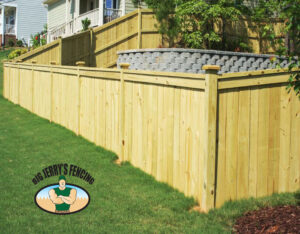
- Appearance: Aged wood with a light yellowish-green color that can be either stained or painted.
- Durability: Moisture-resistant, making it suitable for humid areas.
- Affordability: Amongst the three options, this one is the cheapest.
- Maintenance: Sealing should be done every few years to avoid warping.
- Lifespan: Approximately 20 to 25 years, but mainly depending on the care given and the place.
Redwood vs Cedar vs Pressure-Treated Pine: What’s the Difference?
Cedar and redwood are the primary choices for fencing materials due to their favorable attributes regarding cost, appearance, durability, and resistance to environmental factors. Cedar is generally less expensive and widely available, making it a popular option for those seeking an attractive yet cost-effective fence. In contrast, redwood is more costly, denser, and lighter in color, and it offers the greatest longevity among residential wood fencing materials, contributing to a more refined appearance. The natural tannins and oils in redwood provide exceptional resistance to rot, moisture, and insect damage, making it suitable for use in coastal or high-humidity regions. Cedar performs best in moderate or dry climates, where its durability is enhanced by regular application of protective oils.
Aside from these natural woods, pressure-treated pine is another option often used for fencing applications, where cost and strength are the primary concerns. The wood undergoes chemical processing. Pressure-treated pine is also commonly used for fencing, particularly when affordability and structural strength are prioritized. This wood is chemically treated to enhance resistance to insects, decay, and moisture, making it suitable for environments with high humidity or variable weather conditions. While pressure-treated pine does not possess the natural coloration of cedar or redwood, it can be readily painted or stained to accommodate diverse aesthetic preferences.
Cost Comparison
All being considered, fencing made from cedar, redwood, and pressure-treated pine has varying prices based on their respective advantages. Pressure-treated pine, being the cheapest of the three, is priced at $15–$25 per linear foot and is thus perfect for bulk or cheap projects. Cedar, which costs $20–$35 per linear foot, is where affordability meets natural appeal. In the meantime, redwood, costing $35–$50 per linear foot, is the luxury option, prized for its beautiful appearance, density, and durability. Although redwood’s premium price reflects its rarity and beauty, cedar’s greater availability keeps shipping and labor costs down. Pressure-treated pine offers the best value for homeowners who prioritize function over luxury.
Aesthetics and Appearance
There is a distinct visual appeal to each variety of wood. Cedar boasts honey-brown or light reddish colors with warm tones, naturally graying to silvery as the seasons pass, providing a warm, rustic appearance. Redwood is known for its deep, rich red color and dense grain pattern for classic elegance. Light yellowish-green pressure-treated pine is easy to paint or stain, blending with any home design. For a traditional, cozy look, cedar is the best; for a rich, sophisticated appearance, redwood has no equal; and for budget-friendly flexibility, pressure-treated pine is the most versatile option.
Hardness and Durability
Durability is a primary consideration when selecting fencing material. Redwood is the closest to solid, naturally resistant to rot, decay, and insects—ideal for moist or coastal environments. Cedar is less hard but otherwise durable and will generally last 15–20 years under proper care. Pressure-treated pine, treated with chemicals, can be more resistant to moisture and termites than cedar and will last for up to 20–25 years with proper care. For ultimate weather resistance and strength, redwood is the most durable performer. For an optimal blend of cost and longevity, cedar is a good choice, but pressure-treated pine offers dependable longevity at an affordable price.
Dimensional Stability
Dimensional stability determines how much wood retains its form when exposed to fluctuating moisture and temperatures. Cedar is light, naturally stable, and warps and cracks very little when properly sealed. Redwood withstands damp conditions very well and retains its shape and form for decades, thanks to its dense grain. Pressure-treated pine, while long-lasting, can become warped or develop hairline cracks over time unless regularly sealed. For regions with high humidity, redwood offers superior stability; for arid climates, cedar is best; and for cost-effectiveness and flexibility, pressure-treated pine is a solid choice.
Maintenance Requirements
Maintenance involves both inspecting and determining the longevity of your fence. Cedar must be cleaned, stained, or sealed every 2–3 years to keep its color and prevent moisture damage. Redwood, thanks to its essential oils, requires resealing only every 4–5 years, making it a low-maintenance choice. Pressure-treated pine, however, needs frequent sealing and cleaning to avoid cracking, fading, or water absorption. If you desire low-maintenance aesthetics, then redwood is the best investment. Cedar offers a workable compromise, while pressure-treated pine is strong but requires extra maintenance.
Environmental Impact
All three woods are greener than man-made materials, though their sustainability factors differ. Cedar is the most environmentally friendly option because it’s plentiful throughout North America, reducing transportation emissions. Redwood is harvested from sustainably certified forests along the Pacific Coast and has a long service life, reducing waste from replacements. Pressure-treated pine is sustainable, but chemical treatment brings down its overall environmental ranking. If local sourcing and sustainability matter most, cedar is the top choice. However, redwood’s longevity means fewer replacements over time, making it another eco-smart investment.
Regional Availability and Climate Suitability
Cedarwood fencing is available across the United States, making it easy to install and generally accessible in most areas. In temperate zones with low humidity, cedarwood performs best, as its natural oils protect it from moderate weather conditions. On the contrary, redwood, which is primarily sourced from the West Coast, flourishes in humid or coastal climates, as moisture helps preserve its rich color and durability. Redwood remains the best choice for rainy or coastal regions, though it can be harder to obtain in some areas. Pressure-treated pine, however, is a universal product available nationwide and performs well in diverse weather conditions, including humid or wet conditions, thanks to its chemical treatment that protects against insects and rot. Thus, cedar is suitable for dry, interior areas; redwood is best for coastal areas; and pressure-treated pine is the most versatile option for mixed or unpredictable weather.
Lifespan and Long-Term Value
The lifespan of your fence is determined by both the wood type and the maintenance level. Cedar will usually last 15–20 years, and redwood will last 25–30 years or longer with minor upkeep. Pressure-treated pine, when well sealed and maintained, has a lifespan of approximately 20–25 years and is a solid choice for long-term value on a smaller budget.
Though redwood is more expensive initially, it does not need to be replaced as often and fades less quickly, providing better long-term value. Cedar’s affordability is enticing to those who want beauty and functionality without breaking the bank. Pressure-treated pine strikes a balance between cost and longevity, providing the best of both worlds for those who want longevity without paying a high price. When analyzing total value, consider how long you intend to live in your home, how much upkeep you’re willing to do, and the overall appearance you want.
Best Use Cases – When to Use Cedar, Redwood, or Pressure-Treated Pine
Depending on budget, location, and design requirements, you can choose cedar, redwood, or pressure-treated pine fencing.
Cedar is ideal for those who desire a beautiful, affordable fence that offers privacy, ornamental value, and is best suited for dry or mild weather conditions. Redwood is suitable for individuals seeking a high-end, long-lasting fence for upscale or oceanfront homes, or for damp locations. It’s a high-end option for long-lasting beauty and durability. Pressure-treated pine is ideal for cost-conscious homeowners seeking durable, functional, and versatile fencing. It’s very resistant to moisture and insects, and ideal for large projects or sections of the property with inconsistent weather.
Advantages and Disadvantages of Cedar, Redwood, and Pressure-Treated Pine
Cedar Fence Advantages:
- Easy to locate and inexpensive
- Innately resistant to bugs and rot
- Lightweight and simple to install
Cedar Fence Cons:
- Needs regular upkeep
- Softer and less durable compared to redwood
Redwood Fence Pros:
- Stunning, rich, premium color and grain
- Long-lasting and very durable
- Naturally resistant to rot and moisture
Redwood Fence Cons:
- Heavy on the wallet
- More difficult to find in certain areas
Pressure-Treated Pine Pros:
- Cheapest option
- Great resistance to rot, decay, and termites
- Can be stained or painted to a specific color
Pressure-Treated Pine Cons:
- Needs regular sealing to avoid cracking or fading
- May warp slightly with time unless properly maintained
The Right Wood Fence for You
If you’re on a tight budget and want a classic, reliable fence, cedar is a great option—it’s attractive, easy to find, and offers excellent value. For homeowners who want luxury, durability, and minimal upkeep, redwood is well worth the investment. If you’re prioritizing affordability and strength for a large project or rental property, pressure-treated pine is the most cost-effective and practical solution.
Consider your budget, neighborhood climate, and upkeep style before making a decision. As long as the right wood is selected and installed correctly, any of these woods can improve your home’s curb appeal and long-term value.
Get Expert Fence Installation with Big Jerry’s Fencing
Regardless of the wood you select—cedar, redwood, or pressure-treated pine—professional installation is what matters. At Big Jerry’s Fencing, our professional staff assists you in choosing the perfect fencing material for your house, finances, and regional climate. We are experts in accurate installation, superior materials, and workmanship that ensure both longevity and attractiveness.
Phone Big Jerry’s Fencing today for a complimentary quote, and have our pros deliver your fencing dream in a sturdy, sophisticated, and durable finish.
Built to Last – Building a reputation for reliability
When it comes to fencing, durability is the key to long-term satisfaction. Redwood possesses unparalleled strength, resistance to moisture, and inherent protection from rot and termites. Cedar works well in most climates with proper maintenance, while pressure-treated pine offers a balance between resilience and affordability, with a lifespan of up to 25 years with proper care.
Every type of wood is weather-resistant, but redwood performs best in damp environments, cedar does well in arid climates, and pressure-treated pine adapts to any climate with regular upkeep.
Ready for a Durable Fence? Invest in your estate with a fence that’s made to last. Consult with the professionals at Big Jerry’s Fencing for sage guidance, superior products, and skilled installation to provide long-term beauty, durability, and worth.