Big Jerry’s Fencing offers dependable wildlife fencing solutions throughout Atlanta, Charlotte, Fayetteville, Nash County, Raleigh, Nashville, Boise, Pittsburgh, Columbus, and more, making us the company communities rely on.
Step into the wild, and you’ll notice something simple yet powerful: fences are everywhere. But out here, a fence isn’t just a line in the ground. It can decide whether an animal makes it to water, follows its migration path, or never makes it at all. A poorly built fence can trap a deer mid-jump or block a fawn from its mother. The right kind of fence, though? It quietly does its job, keeping livestock secure, roads safer, and wildlife free to move as nature intended.
Why Does It Exist?
Accidents on highways are reduced when wildlife fences are placed. Fields are spared from hungry visitors. Migration routes are preserved instead of being cut off. A balance is created; one where humans and wildlife can share space without constant conflict.
Not All Fences Are Equal
A fence with barbed wire can trap a deer mid-jump. A fence built too low can block fawns from crossing. And A fence too tall may strand elk on one side forever. Wildlife fencing avoids these mistakes. It is designed for coexistence, not confrontation.
The Secrets of a Wildlife-Friendly Fence
Smooth Wires Are Your Best Friend
Barbs are avoided. Smooth or high-tensile wires are preferred. Animals cross without cuts or tangles. Strength is kept, but cruelty is not invited.
The Right Height
Top wires are kept low enough for deer to jump. Bottom wires are raised just enough for smaller animals to slip through. The design feels simple, yet it saves countless lives every season.
Enhanced Visibility
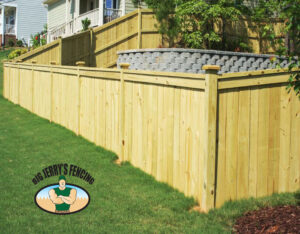
A fence that can’t be seen is a fence that can kill. Wooden rails, bright markers, or mesh are used to make fences visible. Animals recognize the barrier, and collisions are reduced.
Escape Is Always Offered
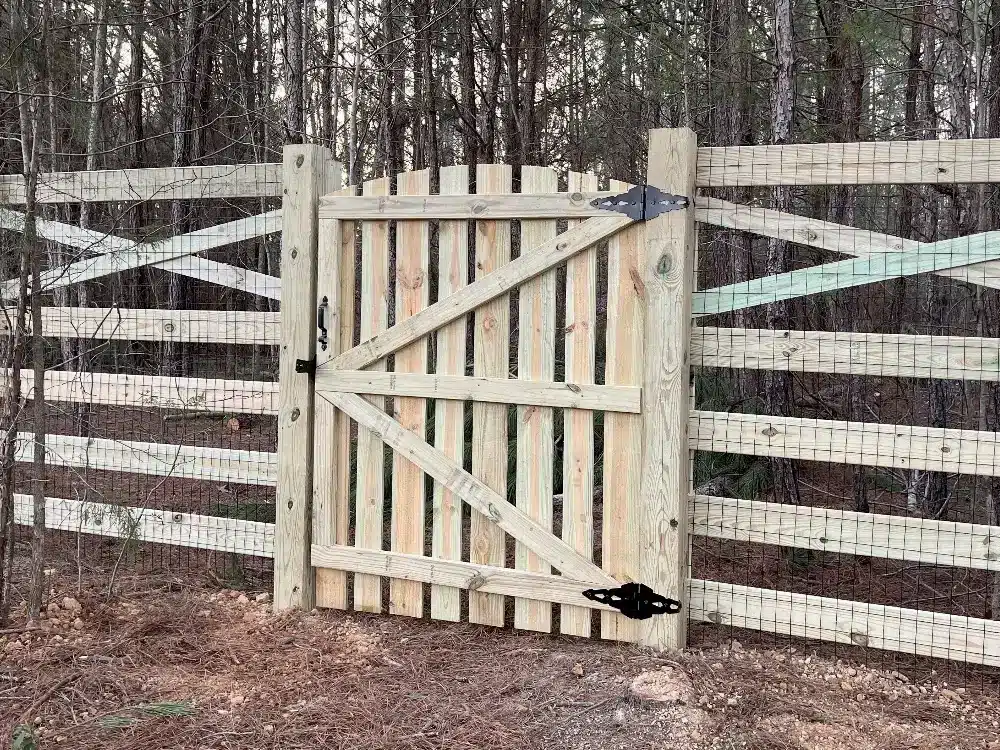
One-way gates and escape ramps are often built into fences. If an animal finds itself trapped, a way out is always present. Safety is not left to chance.
Flexible Options Are Added
Some fences are built to be lowered during migration months. They stand when protection is needed, then rest when animals must move freely. A fence that adapts feels more natural, less harsh.
Where Wildlife Fences Are Needed The Most?
- Highways: Wildlife-vehicle crashes are reduced. Lives of both drivers and animals are saved.
- Farms: Crops are shielded, but nature is not completely shut out.
- Protected Lands: Habitat connections are kept alive.
- Suburban Edges: Wildlife and people meet safely, without chaos.
Wildlife doesn’t read property lines. Deer, elk, foxes—they move where they must. The question is simple: will our fences harm them, or help them? With wildlife fencing, the answer leans toward harmony!
Big Jerry’s Fencing is the go-to company for wildlife fencing, serving Atlanta, Charlotte, Durham, Raleigh, Jacksonville, Orlando, Tampa, Pittsburgh, Columbus, and across Northwest Arkansas with trusted expertise.