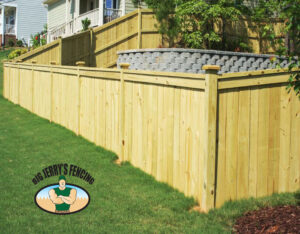
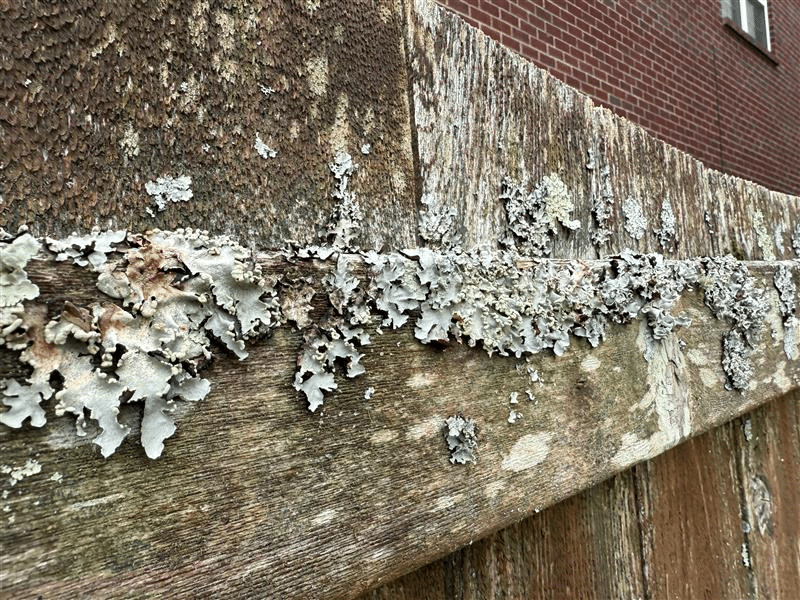
Ever walk past your wood fence and catch a whiff of something… funky? Maybe you spot a patch of green fuzz or a streak of black creeping up the boards. Yep—mold and mildew have moved in, and they’re not paying rent. This calls for a thorough cleaning routine!
Step 1: Inspect Your Fence Like a Pro
Before you clean anything, take a good look. Walk along your fence and check both sides.
- Tap the boards—do they feel solid or spongy?
- Look near the ground and under plants—these spots stay damp longer.
- Spot any bubbling, cracking, or deep staining?
If the mold is on the surface and the wood feels firm; it’s time to clean!
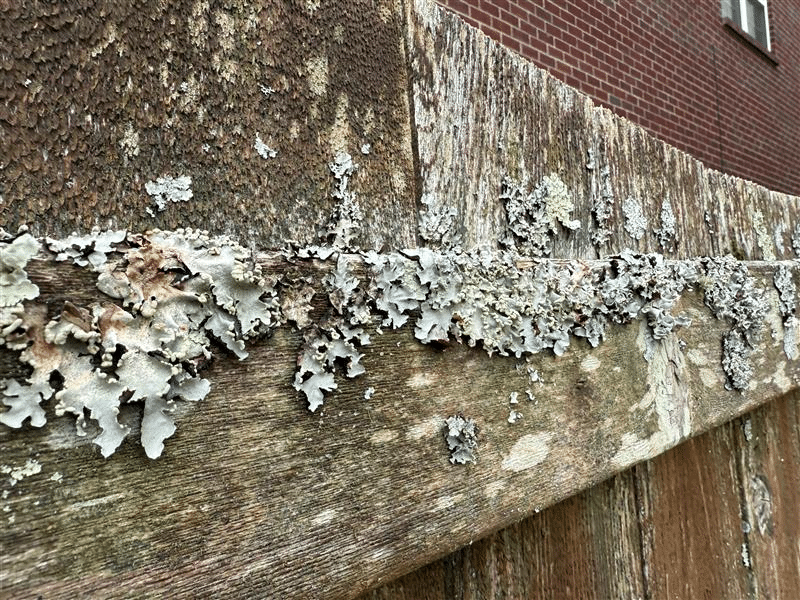
Step 2: Choose Your Cleaning Method Wisely
Here’s what works—and what we recommend.
Natural Cleaning Solutions
White Vinegar + Water
Mix 1 part white vinegar to 1 part water. Spray or sponge it on the moldy spots. Let it sit for 10–15 minutes. Then scrub and rinse. Good for light mildew.
Oxygen Bleach (Sodium Percarbonate)
This is stronger but still safe for wood. It lifts mold without fading the color. Mix with warm water, apply, wait 15–20 minutes, then scrub and rinse.
Commercial Fence Cleaners
Deck & Fence Wash
Products should be labeled wood-safe and biodegradable. They can be applied with a sprayer or brush and must be rinsed after a short soak.
Mold and Mildew Removers
These are usually sold as hose-end sprayers. They’re sprayed on, left for 10–15 minutes, and then rinsed thoroughly.
Wet & Forget
This is sprayed directly on moldy surfaces. No scrubbing is needed. Results are seen slowly over the next several days.
Step 3: Pressure Wash—With Caution!
Yes, you can pressure wash. But go easy.
- Keep pressure between 800–1500 PSI
- Use a 25° or 40° nozzle
- Hold the wand at least 12–18 inches away
- Spray along the wood grain
- Never focus the spray in one spot
Step 4: Rinse Well. Let It Dry.
After you’re done cleaning, rinse the fence with clean water. It’s better to use a garden hose for this purpose. Make sure to wash away all cleaner, grime, and loose mold. Then let the fence dry completely.
Step 5: Seal It Right To Keep Mold Away
Once your fence is fully dry, it’s time to protect it.
What to Use:
- Waterproof Sealer: Clear or semi-transparent. Great if you love the natural wood look.
- Stain + Sealer Combo: Adds color while sealing the surface.
- Mildew-Resistant Finish: Some sealers include anti-mold additives.
Let it cure for 24–48 hours before touching or watering nearby. We recommend resealing every 2–3 years, or sooner if water stops beading on the surface.